
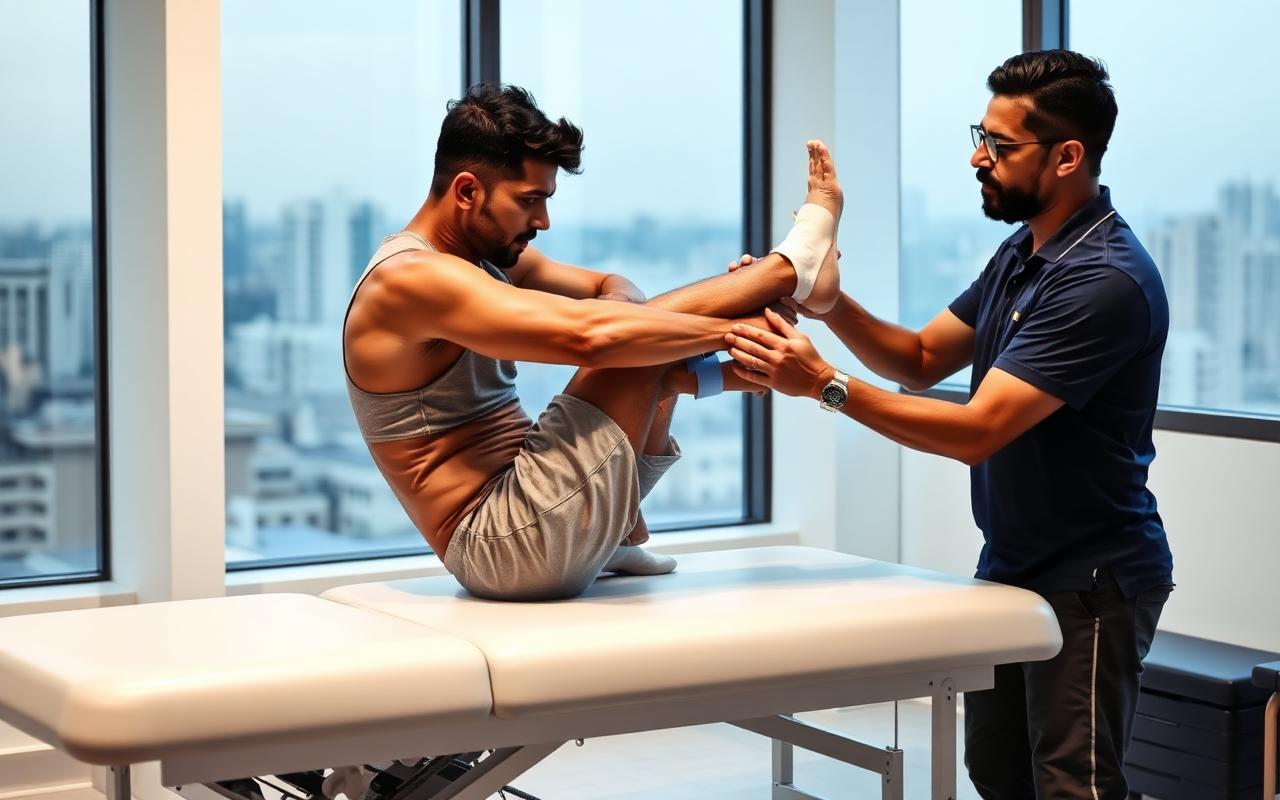
Whether you're a weekend cricketer in Ahmedabad, a marathon runner training along Sabarmati Riverfront, or a gym-goer recovering from a strain — the wrong recovery plan can extend your downtime by weeks. Here's how proper sports physiotherapy gets you back stronger.
The first 48 hours matter most
Apply the PEACE protocol: Protect, Elevate, Avoid anti-inflammatories (early), Compress and Educate. Skip aggressive icing — modern evidence supports gentle, early movement once safe.
Common injuries we treat
Hamstring strains, ankle sprains, ACL tears (pre and post-op), rotator cuff injuries, tennis elbow, runner's knee and shin splints — all benefit from a structured rehab plan.
A 4-phase return-to-play protocol
Don't rush back too soon — re-injury risk skyrockets if you skip phases.
- Phase 1: Pain control and tissue healing
- Phase 2: Restore range of motion
- Phase 3: Sport-specific strength and power
- Phase 4: Plyometrics, agility and return-to-play testing
Why structured rehab beats rest alone
Just resting weakens the muscles around the injury and increases re-injury risk. A guided program restores strength, balance and confidence — so you come back better, not just healed.
Frequently asked questions
How soon can I return to sport after an injury?
It depends on the injury — minor sprains can take 2–3 weeks, while ACL recovery takes 6–9 months. We use objective return-to-play testing to make sure you're truly ready.
Do you treat post-ACL surgery patients?
Yes — we follow structured ACL rehab protocols all the way to return-to-sport, working closely with your orthopaedic surgeon.